Sleeping Position and Carpal Tunnel: Why 3 A.M. Is the Worst Hour

If your hands go numb at night and you shake them awake, that pattern has a name in the medical literature, the "flick sign," and it's one of the most characteristic features of carpal tunnel syndrome. The nighttime timing isn't bad luck. It's mechanics.
What Happens While You Sleep
The carpal tunnel is a rigid passage at the base of your palm. The median nerve and nine tendons run through it, and there's no spare room. When your wrist bends in either direction, pressure inside the tunnel rises sharply. Awake, you constantly reposition without noticing. Asleep, three things gang up on the nerve:
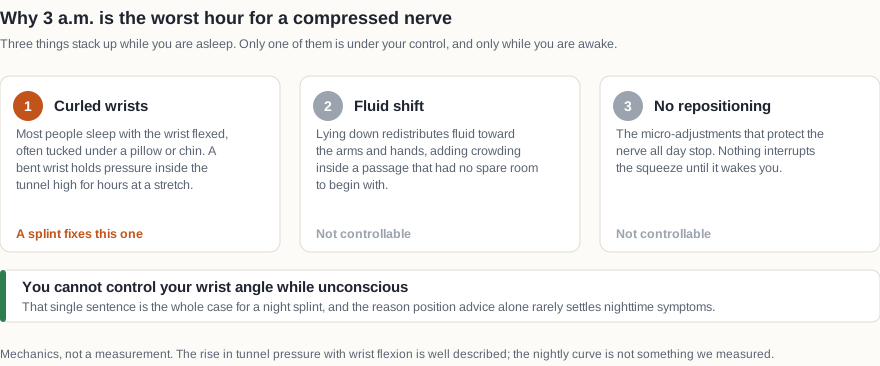
- Curled wrists. Most people sleep with wrists flexed, often tucked under a pillow or chin. A bent wrist can hold tunnel pressure high for hours at a stretch.
- Fluid shift. Lying down redistributes fluid toward the arms and hands, adding a little more crowding inside a tunnel that had none to spare.
- No repositioning. The micro-adjustments that protect you during the day stop. The nerve gets squeezed continuously until it complains loudly enough to wake you.
Positions That Make It Worse
- Hands under the pillow or head. The classic offender. Wrist flexed, body weight on top.
- Fetal position with curled wrists. Comfortable everywhere except inside your carpal tunnel.
- Sleeping on your arm. Adds direct compression and cuts circulation on top of the wrist angle.
- Stomach sleeping with hands tucked under you. Same combination, more weight.
What Actually Helps
A night splint, first and foremost. You cannot consciously control your wrist angle while unconscious. That's the entire case for a splint, and it's why night splinting is the home measure with real trial support: about triple the odds of overall improvement at four weeks versus no treatment in randomized studies. Our picks are in the night splint roundup.
Position tweaks that cost nothing:
- Keep arms at your sides or on a pillow in front of you, wrists flat, not under anything.
- Back sleeping with hands resting on the mattress or your torso is the least provocative position.
- If you side sleep, hug a pillow so your top arm has somewhere to rest with a straight wrist.
- Avoid draping a wrist over the edge of the mattress, which leaves it flexed all night.
Manage the evening inputs. A long night of gaming or typing right before bed sends you to sleep with an already irritated nerve. Breaks and a sane desk setup lower the baseline before your head hits the pillow.
When Night Symptoms Mean More
Occasional nighttime tingling that a splint fixes within a few weeks is the mild end of the spectrum. Numbness that becomes constant, weakness in your grip, or wasting of the muscle pad at the base of the thumb means the nerve is losing ground, and that damage can become permanent. Don't sleep on that, literally or otherwise. Read when to see a doctor.
See the best night splints